Case Study / Property Management / BUILD Sprint
Property Intake & Onboarding System
340 units.
6 staff. One inbox
full of missing documents.
A growing property management company had tripled its portfolio in three years. Its intake process had not changed since unit one. We fixed it in 20 days for $3,500.
Harlow Property Group is a composite name used for illustration. Operational details are representative of real client conditions.
The Problem
They tripled their portfolio.
Their intake process
was still a PDF and a prayer.
Tenant applications came in by email. Documents were chased manually. Lease packets were printed, scanned, and emailed back. Every new unit added more volume to a process already at its limit.
Applications arrived by email
PDF attachments and printed forms made application status hard to trust.
Document collection was manual
Leasing agents chased IDs, pay stubs, and references one email at a time.
Pipeline visibility was missing
Every status question required someone to dig through email or update a spreadsheet.
Move-in was still paper
Inspection notes and photos lived in folders, phones, and email threads.
Module 01 / Digital Application
Applications in. Instantly organized. No inbox required.
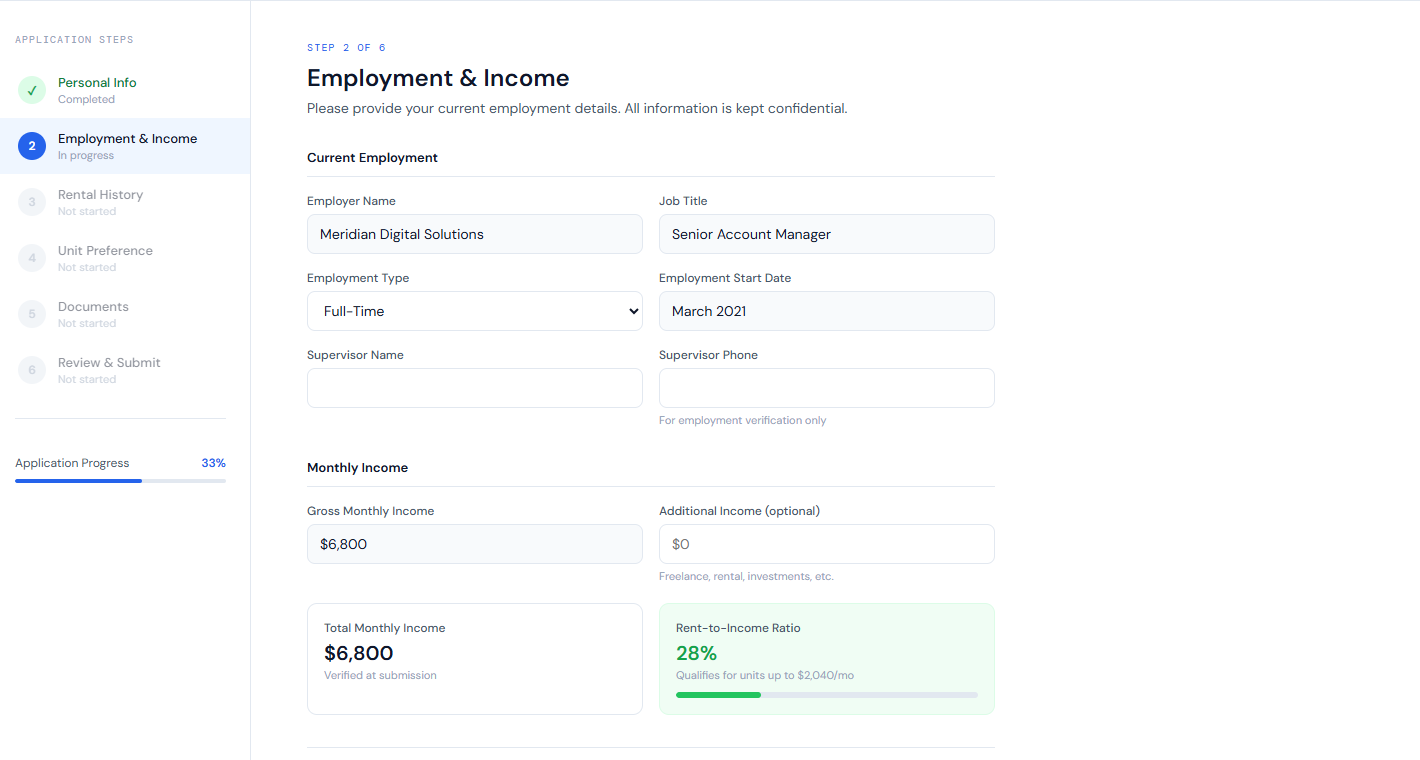
A clean multi-step online application replaced PDF email submissions. Applicants complete contact details, employment, income, rental history, and unit preference in a guided flow. Each submission lands directly in the leasing dashboard, timestamped and assigned.
- Multi-step form with progress indicator to reduce abandonment
- Unit selection built into the form so applicants only see open units
- Instant confirmation email sent on submission
- Application data arrives structured, not as an email attachment
Module 02 / Document Collection
Every required document. One portal. Status visible at a glance.
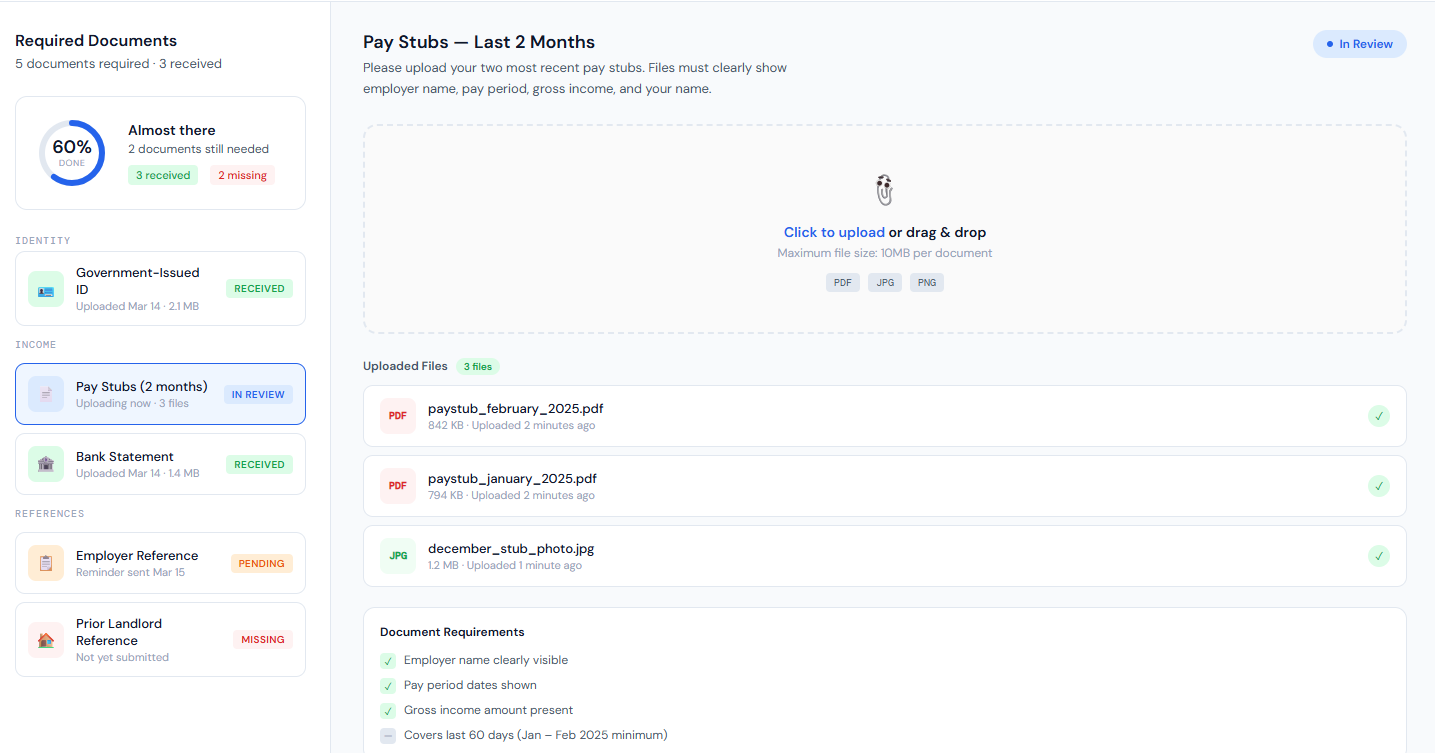
After submitting an application, each applicant receives a secure document portal link. Required items are listed with upload slots, and the leasing dashboard shows what has been submitted, what is pending, and what is still missing.
- Per-applicant checklist for ID, pay stubs, and references
- Upload status visible to both applicant and leasing agent
- Documents stored outside email threads
- Completeness score available before review begins
Module 03 / Status Visibility
The full leasing pipeline, visible to every agent at any time.
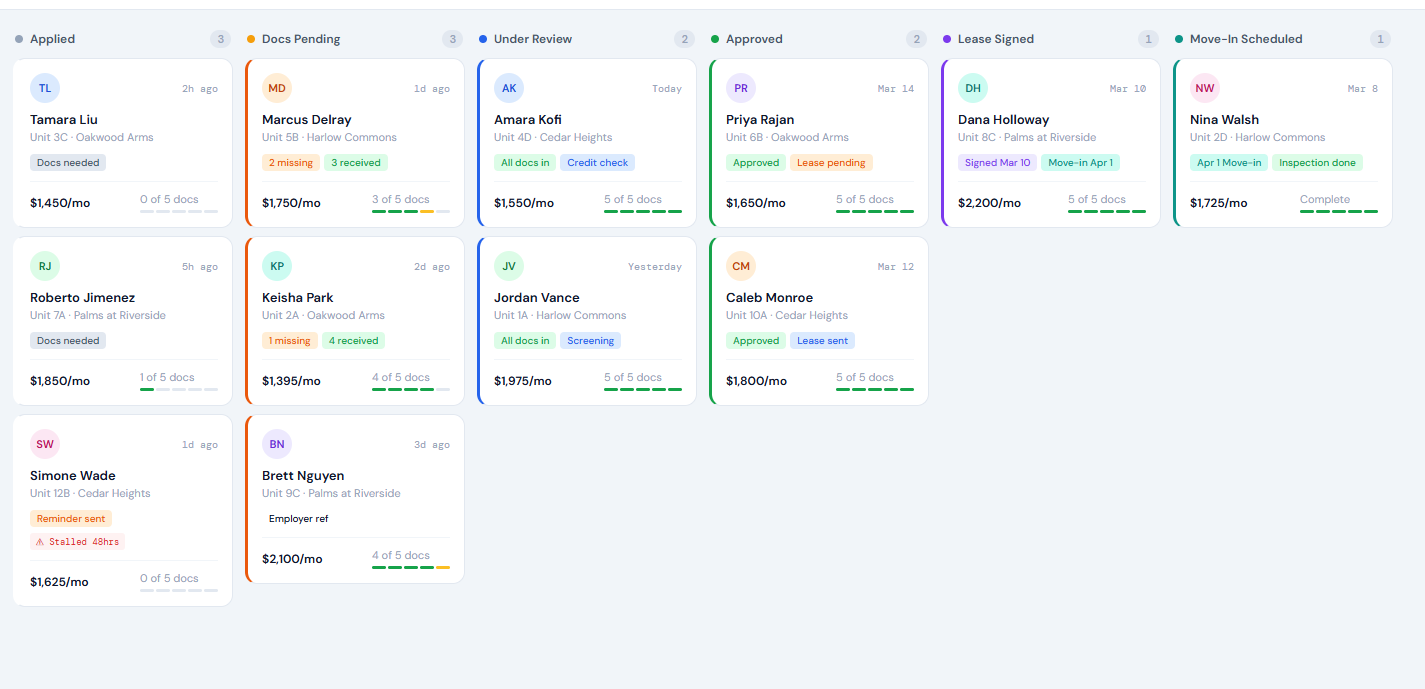
A pipeline view shows every active applicant's position from applied to signed. Leasing agents see their own queue, property managers see the full portfolio view, and ownership gets summary numbers without asking for a status update.
- Pipeline stages match the real leasing workflow
- Agent and portfolio views with role-based access
- Unit availability updates when leases are signed
- Time-in-stage tracking flags stalled applications
Module 04 / Automated Communications
Missing documents chase themselves. Approvals notify themselves.
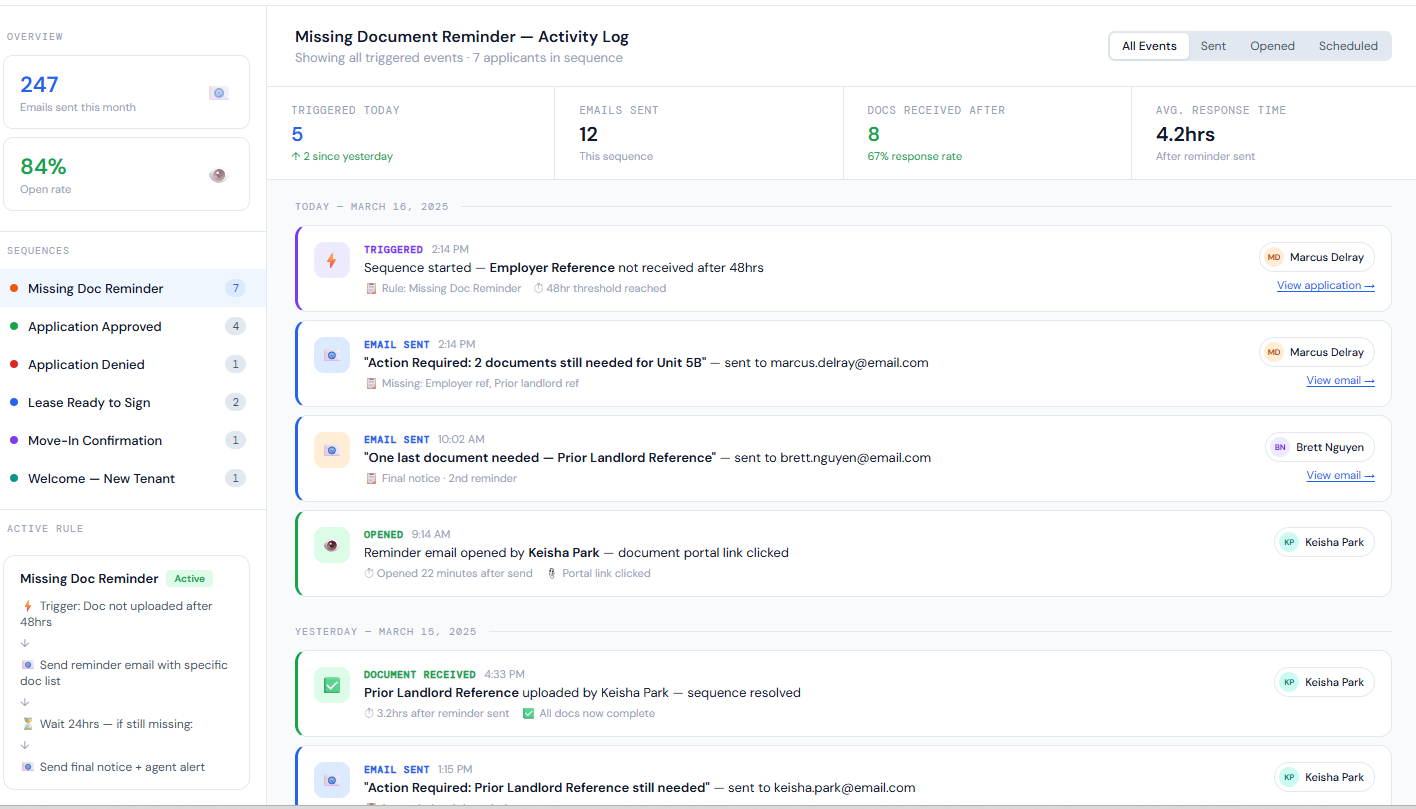
If an applicant has outstanding items after 48 hours, a branded reminder goes out automatically. Approval notifications, denial letters, and lease-ready alerts all trigger from pipeline stage changes.
- 48-hour missing document reminders specific to outstanding items
- Approval and denial messages trigger on status change
- Lease-ready alert sent when documents are ready for signature
- Move-in confirmation sent automatically after lease signing
Module 05 / Move-In Documentation
Room-by-room. Photo-attached. Stored permanently.
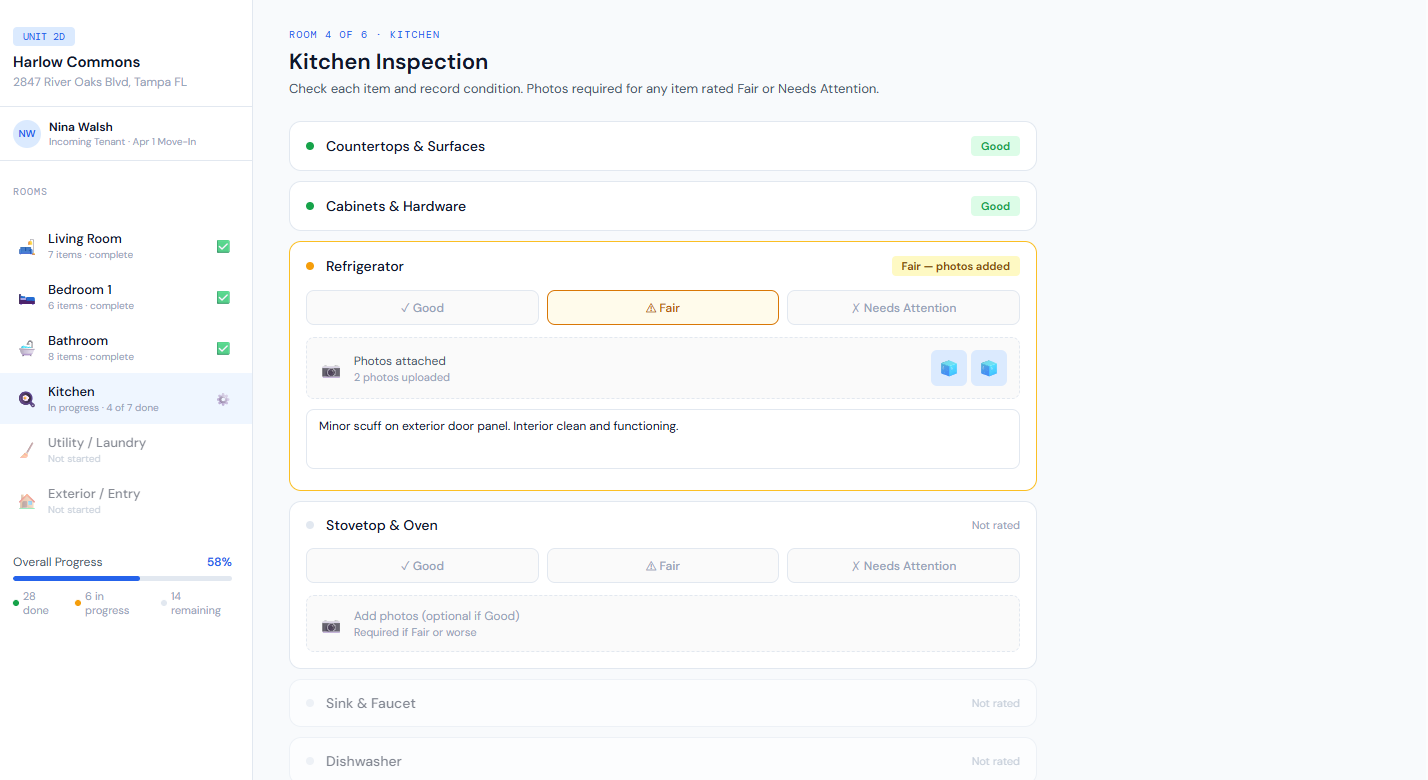
Move-in inspections are completed on a phone or tablet, room by room, with condition ratings and photo uploads. The completed inspection is timestamped, linked to the lease, and stored in the tenant record.
- Room-by-room digital checklist with condition ratings
- Photo upload per item embedded in the inspection record
- Tenant and agent signatures captured digitally
- Inspection stored permanently with lease and unit history
I used to spend half my Monday just figuring out where every application stood. Now I open one screen and I know.
Measured Outcomes
What 20 days changed for a 340-unit operation.
Outcomes measured at 60 days post-launch.
Ready to run your first sprint?
Tell us what's slowing you down. We'll scope the system that fixes it and build it in 20 days.